9th Annual "Lynching in Maryland" Conference
October 24, 2026 @ 9:30AM — 4:00PM Eastern Time (US & Canada) Add to Calendar
The Lewis Museum: 830 E Pratt St Suite 385 Baltimore, MD 21202 Get Directions
8
days
18
hours
9
minutes
7
seconds
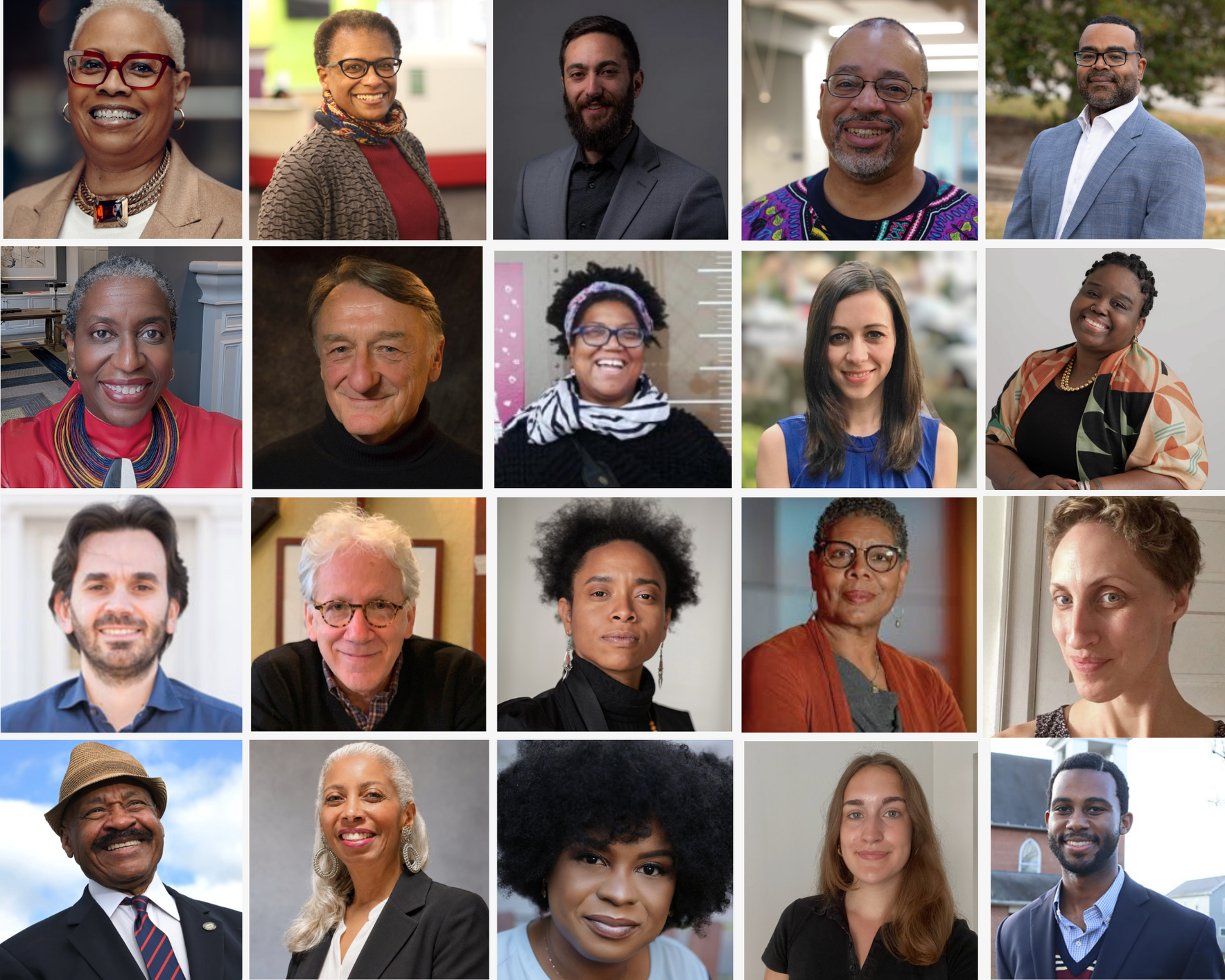
The Maryland Lynching Memorial Project will hold its 9th Annual "Lynching in Maryland" Conference on Saturday, October 24, 2026 from 9:30am to 4:00pm at the The Lewis in Baltimore.
This year's conference program presents a full day of powerful, thought-provoking, and inspiring presentations and discussions with experts, thought leaders, and community members. Speakers and attendees will consider the history and truth of racial terror lynching in Maryland, its lasting effects, and the efforts around the state to confront the truth so that healing and reconciliation might begin.
We are offering both in-person and virtual attendance. Those attending in-person will be provided with morning refreshments and lunch; opportunity to purchase books written by guest speakers; and access to the Lynching in Maryland exhibit, a collaboration between The Lewis and the Maryland Lynching Memorial Project. Doors open at 8:45am for networking and light breakfast. See below for additional conference details ~ and check back as program updates will be made over the coming weeks.
9th Annual "Lynching in Maryland" Conference Program
The Maryland Lynching Memorial: Community Engagement in Memorialization
The Maryland Lynching Memorial Project has been working to create a permanent, public Maryland Lynching Memorial dedicated to the state’s 38 known and countless unknown racial terror lynching victims. Conversations with the broader community have been ongoing to guide the project, ensuring the process creates space for community voices most affected by racial terror, preventing reinjury, and pursuing repair. Join Maryland Lynching Memorial Project board member Clory Jackson, multimedia artist Ada Pinkston, and civil right activist Carl Snowden, to hear an update on the Memorial, why community engagement is important in memorialization, and to contribute to the conversation. Prior to hearing from the panel, Will Schwarz, founder of the Maryland Lynching Memorial Project, will provide an update on the memorial.
Ms. Jackson is a creative artist-activist blending live performance, social discourse, and grassroots organizing to help communities disrupt patterns of hate and systemic oppression. She founded The Brownsville Project in 2018, inspired by her journey tracing her father’s family history as Black Americans in Appalachia and her maternal grandmother’s legacy as a Civil Rights activist in Chicago. She holds a Bachelor of Arts in Drama from Spelman College, an MFA in Acting from Penn State University, and studied musical theatre at Shenandoah Conservatory. After performing regionally and working in New York’s tech start-up scene, Ms. Jackson merged her business knowledge with her family's civil rights legacy and her passion for storytelling. She is deeply committed to lifelong learning, currently exploring spiritual healing and liberation practices that inform her work.
Ms. Pinkston is a multimedia artist, educator, community artist, and cultural organizer living and working in Baltimore. Her performance work has been featured at a variety of spaces including The Smithsonian Arts and Industries Building, The Baltimore Museum of Art, The Walters Art Museum, The Peale Museum, Transmodern Performance Festival, P.S.1, The New Museum, Light City Baltimore and the streets of Berlin, Baltimore, Orlando, Washington DC, and New York. A graduate of Wesleyan University (B.A.) and Maryland Institute College of Art (M.F.A.) she currently is a lecturer in art education at Towson University. She has presented public lectures on memory and public space at The French Embassy, NYU, UCLA, USC, Columbia University, and The National Gallery of Art. Her work has been supported by The Yaddo Artist Residency and McDowell Colony. Her work can be found in the permanent collection of the Los Angeles County Museum of Art, The Spelman Museum and the augmented reality sculpture garden at Magic Johnson Park in South Central Los Angeles. Limited editions of her most recent work can be found at The Mimosa House London. In 2023, she was appointed as a member of the Maryland Commission on African American History and Culture under the leadership of Governor Wes Moore.
A civil rights activist, Mr. Snowden’s career spans five decades of work and advocacy to ensure free speech and opportunity, particularly for people of color. He is the founder and convener of the Caucus of African American Leaders of Anne Arundel County, has served as an elected City Council member in Annapolis and a government official with the State of Maryland, is an entrepreneur, and has served on numerous boards. Mr. Snowden has erected more than 15 Black history memorials across Anne Arundel County and helped to secure the county’s formal apology for slavery in 2025. He was named to the Baltimore Sun Business and Civic Hall of Fame earlier this year.
After a long career as a television and video producer, Will Schwarz founded the Maryland Lynching Memorial Project in 2018. While president of MLMP, he imagined an annual conference, county-based coalitions, a virtual film series, soil collections, historical markers, a museum installation, and a statewide memorial. Throughout, he asked hard questions about our collective history. Upon his retirement from the MLMP board earlier this year, Will was recognized for his countless hours toward statewide reckoning as an emeritus board member.
Keynote: Getting to Reparations
Maryland is at the epicenter of truth-telling and reparations work. Host to the Maryland Lynching Truth and Reconciliation Commission, the only government appointed body in the country, and the recently established Maryland Reparations Commission, we must ask: What does it take to get to reparations? In this keynote session, Dorothy A. Brown will explore why reparations are necessary for Black Americans, a path of how to achieve it, and what we might consider in the work ahead.
Ms. Brown was born and raised in the South Bronx in New York City. A nationally recognized scholar in race, wealth, and tax policy, she currently holds the Martin D. Ginsburg Chair in Taxation at Georgetown Law. Ms. Brown is the author of The Whiteness of Wealth: How The Tax System Impoverishes Black Americans-And How We Can Fix It and her 2026 book, Getting to Reparations: How Building A Different America Requires A Reckoning With Our Past. She has appeared on ABC’s The View, MSNBC’s Ali Velshi show, MSNOW Connect with Jacob Soboroff, New Yorker Radio Hour, NPR’s Marketplace, and PBS News Hour. Her opinion pieces have been published in The New York Times, The Washington Post, and The Atlantic.
Copies of Ms. Brown’s book, Getting to Reparations: How Building a Different America Requires a Reckoning with Our Past, will be available for purchase and signing at the conference.
Reparations in Maryland
Immediately following Ms. Brown’s keynote session, she will join Dr. Nicholas Creary, Senator Charles E. Sydnor III, and Briayna Cuffie in a dynamic discussion about reparations in Maryland and the ways that we may contribute to the work ahead.
Dr. Creary is a distinguished higher education leader and scholar whose work bridges rigorous historical research, public engagement, and transformative institutional leadership. He is the author of Domesticating a Religious Import and African Intellectuals and Decolonization. In addition to his academic work, Dr. Creary co-founded and served as a commissioner on the Maryland Lynching Truth and Reconciliation Commission, which developed comprehensive recommendations to confront and repair the legacy of racial terror lynchings in Maryland, drawing upon transitional justice principles and community-driven investigation and reform efforts. He has taught at Georgetown University, Marquette University, Ohio University, and the University at Albany (SUNY), and is currently teaching at Coppin State University. He earned his B.A. in History and African Studies from Georgetown University, an M.A. in U.S. History from The Catholic University of America, and a Ph.D. in African History from Michigan State University.
Senator Sydnor was sworn into the Maryland Senate in 2020. He serves on the Judicial Proceedings Committee and Executive Nominations Committee, chairs the Joint Committee on Legislative Ethics, and serves as a Deputy Majority Whip and on the Joint Committee on Children, Youth, and Families, the Joint Committee on Administrative, Executive, and Legislative Review, and the Maryland State Commission on Criminal Sentencing Policy. Additionally, Senator Sydnor has served as the chair of the Baltimore County Senate Delegation. Prior to his time in the Senate, Charles was twice elected to Maryland’s House of Delegates. In addition to his work in the Maryland Senate, he is employed as an Associate General Counsel with the Maryland affordable housing organization, Enterprise Community Investment, Inc. Senator Sydnor received his JD and Master of Policy Science from the University of Maryland Carey School of Law and the University of Maryland Baltimore County. Senator Sydnor was integral in sponsoring Senate Joint Resolution 3, Apology and Acknowledgment for the State’s Responsibility in Racial Terror Lynchings, last spring and will be reintroducing the resolution this session.
Ms. Cuffie is the co-founder and equity advisor for the R4S (Reparations 4 Slavery) portal. With co-founder Lotte Lieb Dula, she has created a guide to reparative genealogy to assist both Black and white people in tracing their ancestry. Ms. Cuffie serves her community as a local historian, genealogist, and educator. She works as a strategist, political advocate, and civil servant specializing in international relations from Annapolis, MD. She and Ms. Lieb Dula are featured in the PBS documentary, “The Cost of Inheritance,” which explores the complex issue of reparations in the United States.
Impact and Repair from Trauma
The health outcomes of Black women and infants can serve as an indicator of the overall health of the community. This workshop will explore how the three realms of trauma and stress converge as factors that shape maternal and infant health outcomes and ultimately reflect the health and well-being of the larger community. Guided by Stacey Stephens, MSW, LCSW-C, conference, participants will learn how to apply strategies that support healthy pregnancies and improve birth outcomes to their own lives to strengthen their health well-being as social justice advocates.
Ms. Stephens, is a nationally recognized leader in maternal and infant health and the Director of B’More for Healthy Babies Upton/Druid Heights at the University of Maryland School of Social Work. With more than three decades of experience as a social worker, educator, and public health practitioner, she has dedicated her career to advancing health equity and improving outcomes for women, children, and families in Baltimore and the Washington, D.C. region. Ms. Stephens also serves as a Clinical Associate Professor at the University of Maryland School of Social Work and an Adjunct Professor at Morgan State University, where she mentors and prepares future social work and public health leaders. Her work has earned numerous recognitions, including the Daily Record’s Top 100 Women in Maryland (2026) and the Baltimore Sun’s 25 Black Marylanders to Watch (2023).
MLMP Digital Archive: Translations Project
Join MLMP Digital Archivist Hannah Young, educator Dr. Katherine Arner, and MLMP Intern Bonnie Holmes as they discuss the MLMP Digital Archive Translations Project. To date, nearly 200 newspaper articles published in the 1800s in the United States, and written in languages other than English, have been identified to have covered racial terror lynchings in Maryland. Of these, Baltimore-based German newspapers printed the majority. An additional 48 articles were printed in papers from Scotland, Northern Ireland, England, Spain, and Germany. In addition to hearing about the translation process, we will learn what has been discovered thus far, what the information reveals about the crimes and role of the newspapers, and the use of language in reporting.
Ms. Young is an educator in Washington, DC and has been working with the Maryland Lynching Memorial Project since 2023. In addition to her work on the MLMP Digital Archive, she has contributed to large archival projects such as ProQuest’s Black Studies and Women and Gender databases. Ms. Young received her Masters in Library and Information Services from Catholic University.
Dr. Arner works as a teacher of Upper School History and Middle School German at St. Paul’s School for Boys. She holds a PhD in History from Johns Hopkins University and bachelor’s degrees in History and German from the University of Wisconsin. She has completed additional training in Holocaust studies and human rights education, and she has contributed to a variety of academic translation projects using her German language skills. Dr. Arner is excited to bring all this experience to the work of the Maryland Lynching Memorial Project.
Ms. Holmes served as an intern for the Maryland Lynching Memorial Project during the 2026 summer. Her focus has been on the translation of articles written in German and Spanish, and published in newspapers printed in the United States and Europe. Ms. Holmes also conducted original research in archives located in Great Britain, Germany, and Spain. She is a third-year student at Newcastle University (England) studying History, Spanish, and German.
Members of the MLMP Digital Archive will be available during the lunch break to offer demonstrations of the archive site and answer questions.
Red Record Consortium
The Red Record Consortium recognizes that the work that unites comes with specific and solemn responsibilities. Investigating, analyzing, and publishing information on historical racial violence draws on a broad history of racism and oppression. These historical harms continue to affect the families and communities who were subjected to violence, for whom the wrongs were never addressed. The Consortium grew out of a 2025 convening hosted by Northeastern University Law’s Civil Rights and Restorative Justice Project (CRRJ). Today, the Consortium is a nationwide group of scholars and non-academic researchers who all work in the area of historical racial violence. Members of the Consortium will present their research to include: cataloging Jim Crow crimes, pedagogy and impact, mapping racism, ethical archiving, and more.
Nikki Brown has been teaching American and African American history at the University of Kentucky since 1999. She majored in History at Oberlin College and she earned a PhD in History from Yale University. Her book, Private Politics and Public Voices: Black Women’s Activism from World War I to the New Deal won the 2006 Letitia Woods Brown Award for Best Book in African American Women in History. Dr. Brown serves as the project manager of the Documenting Racial Violence Project at the University of Kentucky (DRVK Project). The project, which she will discuss in the panel session, seeks to provide biographies and other data for the nearly 353 people lynched in Kentucky for reasons related to Jim Crow and racial segregation. The online archive has a growing database of biographies of lynching victims, as well as other data, including census information, contemporaneous articles, and search functions by county and name.
Gianluca De Fazio is an Associate Professor in the Department of Justice Studies at James Madison University. He received his PhD in Sociology from Emory University. Dr. De Fazio’s research interests include the study of political violence in Northern Ireland and lynching in the United States’ South. He is the director of two digital history projects: Racial Terror: Lynching in Virginia and Memorializing Racial Terror: Lynching Markers in the United States.
Gina Nortonsmith, Archivist for African American History in the Archives and Special Collections in Snell Library at Northeastern University (NU), is a former archivist with the CRRJ, and spearheaded the creation of the Barnes-Nobles Archive. To date, the archive contains more than 1,000 cases of anti-Black violence, and thousands of documents, including death certificates, newspaper articles, court records, police reports and interviews with victims’ families. Ms. Nortonsmith will speak on Archiving Violence: Caring for Both the Represented and the Builders of the Burnham-Nobles Digital Archive (BNDA). She will discuss the collaborative effort between CRRJ and the NU Library to design and build the BNDA that fits the mission and followed archival best practices to do no further harm.
Alex Stein came to Northeastern University’s Center for Law, Equity and Race from the Cook County (Illinois) Public Defenders Office’s Family Defense Division, where he was an Assistant Public Defender litigating cases involving DCFS and other federal agencies. Mr. Stein also has been involved in political and non-profit work in Chicago, with a focus on the abolition of the cash bail system, supporting protesters, and researching historical police violence. He currently serves as the Staff Attorney and Program Director for CRRJ. Mr. Stein will speak to the structure, formation, and overall scope of the Red Record Consortium. He will discuss more specifically how CRRJ’s work, coming from lawyers’ perspectives, fits into the consortium and an understanding of historical racial violence. This includes an understanding of historical laws active at the time, and legal responses in court documents and other governmental proceedings, plus how CRRJ’s redress efforts benefit from the consortium’s reach and expertise.
Naming Resistance as a Response to Racial Terror
What did resistance look like in response to atrocious acts of racial terror in the 1800s and 1900s? In the face of these horrors, were communities galvanized to organize with solidarity or develop individual responses? In what ways have their echoes informed our best practices today? How do they appear in our memory terrain? What lessons can be carried to strengthen the foundation of our collective future? Jaelon T. Moaney will explore these—and other—questions while collapsing the space between then and now.
Mr. Moaney currently serves as Deputy Director of the Starr Center for the Study of the American Experience at Washington College—the first college chartered in the sovereign United States. His lineage on the Delmarva Peninsula traces back over three centuries, including ancestors who founded and established the free Black kinship communities of Unionville, Copperville and the Hill in Easton. Appointed in 2023 by Governor Wes Moore as the youngest member of the Maryland Commission on African American History and Culture and unanimously re-elected for a second consecutive term as Vice Chair of the State agency, Moaney has provided thought leadership on cultural stewardship in the U.S. Congress and across the country. His multilateral advocacy and extensive board service has contributed to multiple federal designations including the Southern Maryland National Heritage Area, the Brown v. Board of Education National Historical Park expansion, and the National Underground Railroad Network to Freedom Isaac Mason Escape Site.
Elbert Williams: Resistance and NAACP’s First Voting Rights Martyr
After 40 years in the courtroom, retired attorney Jim Emison has devoted the last 15 years to civil rights causes including investigating, speaking, and writing about the 1940 murder of Elbert Williams, the first known NAACP member killed for his voting rights work. Mr. Emison’s work has been the subject of two Associated Press articles and has been featured on National Public Radio's All Things Considered. In 2019, he was a featured narrator in WNPT, Nashville Public Television’s, regional Emmy award winning documentary, The Fight to Vote, Black Voter Suppression in Tennessee. As a result of Mr. Emison’s work, the United States Department of Justice placed Mr. Williams on its list of cold cases of racially motivated murders, opened under the Emmett Till Unsolved Civil Rights Crime Act. The District Attorney for Tennessee’s 28th Judicial District opened an investigation into the murder in 2018, but the trail had gone cold.
Mr. Emison’s book, Murder on the Hatchie: The NAACP’s First Martyr, will be published on October 20, 2026. He will be joined in conversation by India Artis to discuss his research; the establishment of an Elbert Williams Interpretive Center (Brownsville, TN), modeled on the Emmett Till Interpretive Center in Sumner, MS; and his recommendations for change.
Ms. Artis's passion for Black history began while studying under Dr. Vivian Gordon, the first Black woman to earn tenure at the University of Virginia. In 1988, she joined The Crisis, the NAACP's historic magazine founded by W.E.B. Du Bois, serving as Senior Advertising Representative before becoming Business Manager, where she worked closely with civil rights leaders Myrlie Evers-Williams, Julian Bond, and Roger Wilkins. Her mentor, with more than 70 years of service to the NAACP, Mildred Bond Roxborough, is the daughter of Ollie and Mattye Bond who established the Brownsville, TN NAACP branch with Elbert Williams. In 2021, Ms. Artis was appointed NAACP Archivist where she oversees the preservation of the Association's historic records and its partnership with the Library of Congress, home to the NAACP's more than five-million-item collection, ensuring the legacy of the civil rights movement continues to educate and inspire future generations.
Copies of Mr. Emison’s book, Murder on the Hatchee, will be available for purchase and signing at the conference.
MLMP at the Lewis Museum: "Lynching in Maryland" Exhibit
All in-person attendees will have access to the permanent exhibit on Lynching in Maryland, created by the Lewis Museum in collaboration with the Maryland Lynching Memorial Project. Plan to spend time walking through this important Maryland space.
Support
The Maryland Lynching Memorial Project is committed to providing accessible, low-cost educational and community experiences for conference attendees. Funds generated through ticket sales and tax deductible contributions directly support programming expenses. If you or your business are interested in being a Conference Sponsor, please contact MLMP Giving or 443-912-4440. Thank you for your support.